

Key Takeaways
- Blurry vision in kids can show up as squinting, headaches, or struggling in school.
- Nearsightedness and eye strain are two of the most common reasons why children have trouble seeing clearly.
- School vision screenings miss a lot, so a comprehensive eye exam gives a fuller picture.
- Children should have their first exam at around 6 months of age, and yearly while they’re in school.
- Sudden vision changes, eye pain, or a wandering eye need prompt attention from an eye doctor.
What Your Child’s Blurry Vision Is Telling You
Your child squints at the board, moves closer to the TV, or complains that their eyes hurt after homework. It’s easy to chalk these behaviors up to tiredness or screen habits, but they’re often the first signs of a vision problem worth looking into.
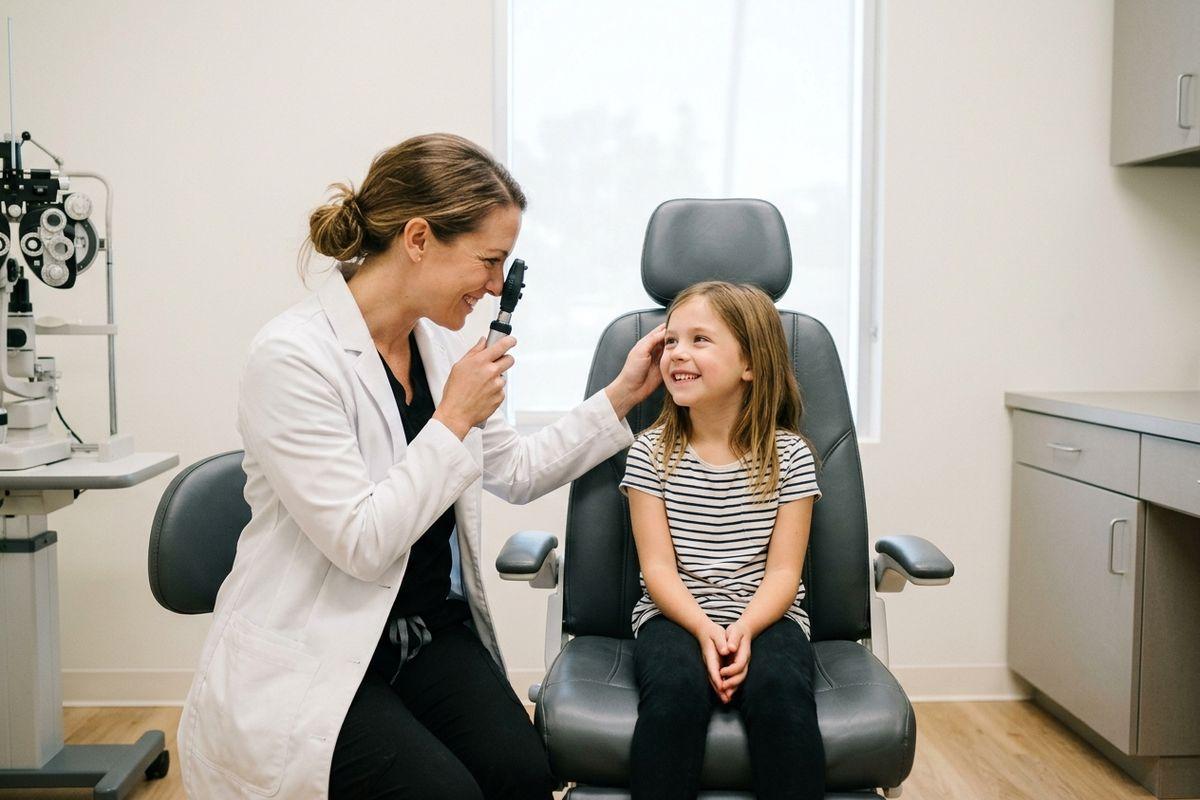
If your child complains of blurry vision, the right first step is scheduling a comprehensive eye exam with Total Vision Encinitas. As part of a thorough, non-invasive children’s eye exam, our team can check how your child’s eyes focus, align, and work together.
Signs Your Child May Have a Vision Problem
Behaviors to Watch For
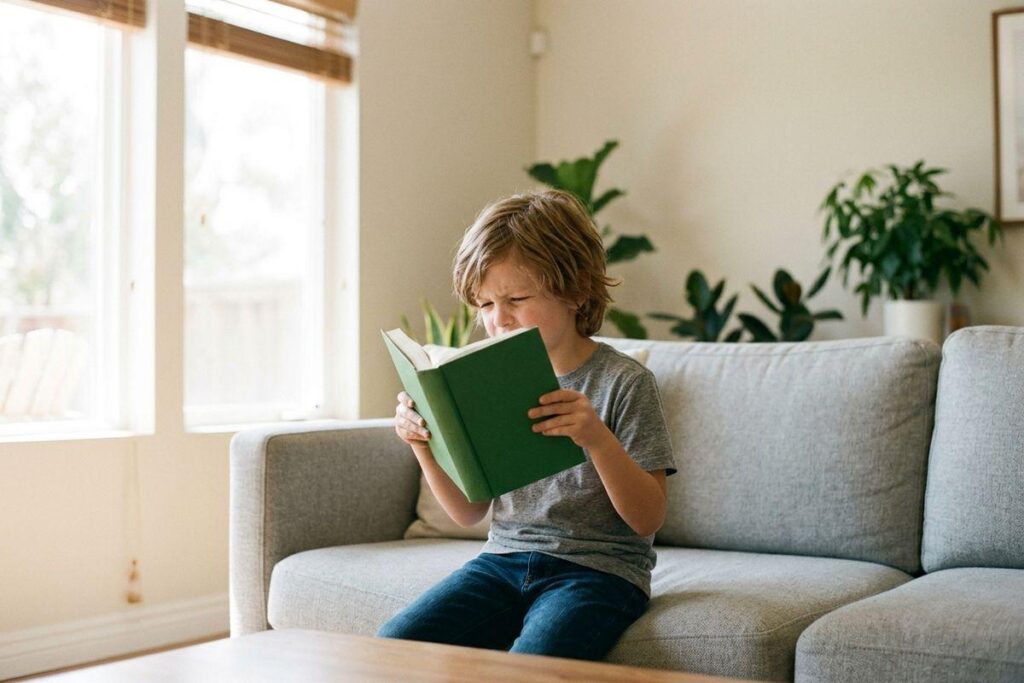
Kids rarely say “my vision is blurry.” Instead, you’re more likely to notice that something’s wrong. For instance, a child may squint across the room at the TV or hold their book so close that it nearly touches their nose. They may also tilt their head at an angle that looks uncomfortable when trying to focus. This is their eyes doing extra work to compensate for something that isn’t quite right.
Frequent headaches during homework or screen time are another sign of a potential problem. If your child dreads reading time or rubs their eyes constantly, that’s their body reacting to the strain of trying to focus.
When There Are No Obvious Complaints
Sometimes there are no complaints at all. Some kids assume that everyone sees the same way they do, so they never even consider complaining.
What you might notice instead is slipping grades, trouble keeping up in class, or a child who seems checked out during reading. In fact, in many cases, vision-related problems can resemble attention or learning issues. If your child avoids books or loses focus quickly during near work, their eyes may be the reason.
Common Reasons Kids Experience Blurry Vision
Nearsightedness and Farsightedness
Nearsightedness, also called myopia, makes distant objects look blurry while close-up vision stays clear. In other words, a child with myopia can read a book just fine, but will struggle to read what’s written on the board at the front of the classroom. Myopia tends to develop during childhood and can progress quickly through the school years, which is why early detection matters.
Farsightedness, also called hyperopia, works the other way around. Children with farsightedness can see distant objects just fine, but close-up objects appear blurry, which can contribute to eye strain and fatigue during reading or other near tasks. Some farsighted kids never complain of blurry vision at all, just tired eyes and headaches.
Eye Strain and Fatigue
With screens now woven into homework, entertainment, and socializing, kids’ eyes are doing near work for long stretches every day. That sustained effort can make the make their eyes tired and cause strain.
This doesn’t always mean that there’s an underlying condition. It does, however, suggest that you should schedule an eye exam for your child to rule out any potential problems that could be making their digital eye strain worse.
Red Flags That Need Prompt Attention
Most blurry vision in children is gradual and tied to a refractive error like myopia. However, some symptoms need attention right away. Contact an eye doctor if your child experiences any of the following:
- Sudden vision changes or vision loss in one or both eyes.
- Eye pain, swelling, redness, or discharge.
- Unequal pupil sizes or an eye that wanders or drifts.
These symptoms all point towards issues that may require emergency eye care.
Why a Comprehensive Eye Exam Matters
School Screenings Are Not Enough
The vision check that your child gets at school is a starting point, not a full evaluation. Most school screenings only test distance clarity with a basic eye chart. They don’t check how well a child’s eyes focus up close, how well their eyes work as a team, or whether one eye is doing more work than the other.
A child can pass a school screening and still have a vision problem that’s affecting their daily life.
What a Comprehensive Exam Covers
A comprehensive eye exam looks at the full picture. Your child’s eye doctor checks their focus at all distances, tests how the eyes coordinate with each other, and examines the overall health of their eyes. Many conditions like amblyopia, commonly called lazy eye, respond much better to treatment when caught early.
An eye doctor in Encinitas can also account for your child’s medical history and habits when making recommendations.
How Often Your Child Should Have an Eye Exam
Recommended Exam Frequency by Age
Eye care guidelines suggest that a child’s first exam should happen around six months of age. The next visit is typically between ages 3–5, then again before starting school. After that, yearly exams while a child is in school can help catch changes as their eyes continue to develop.
Kids’ vision can shift quickly, especially between ages 6 and 12. Staying on a regular schedule means any changes can get addressed before they start affecting school or daily life. If myopia is a concern for your child, our team can walk you through a myopia control program tailored to their needs.
When to Schedule Sooner
If something changes with your child’s vision, don’t wait for their next routine visit. A new complaint of blurry or double vision should always be addressed promptly. The same goes for noticeable changes in how your child approaches reading, screens, or schoolwork.
Catching a vision problem earlier means fewer obstacles for your child as they grow.
Schedule a Visit at Total Vision Encinitas
If your child has mentioned blurry vision or if you’ve noticed any of the signs above, Total Vision Encinitas is ready to help. Our team provides thorough, non-invasive eye exams in a welcoming environment that puts kids at ease. Book an appointment today and get a clear answer about what your child’s eyes need.