


When you have a problem with your eyes, you want to find help quickly. However, it can be confusing to know where to turn—urgent care, the emergency room, or an eye doctor. This guide explains your options so you can get the right care for your vision.
While urgent care centers can handle some minor eye issues, an eye doctor is the right professional for comprehensive exams and most vision problems. Knowing the difference can help you protect your sight and get effective care.
What Urgent Care Can & Cannot Do for Your Eyes
Urgent care centers are a convenient option for general health issues, and they can sometimes help with minor eye troubles. Urgent care providers may be able to address a case of conjunctivitis (pink eye) or a small scratch on your cornea. They can also offer a quick fix for simple, surface-level irritations.
However, these clinics are not set up for in-depth eye health evaluations. They do not have the instruments needed to look at the structures inside your eye. This means they cannot check for developing conditions or determine the root cause of many vision changes.
Urgent care also does not perform refraction tests. This is the process that determines your prescription for glasses or contact lenses. For any issue related to how clearly you see, you need a different level of care.
When an Eye Problem Requires an ER Visit
Some symptoms indicate an eye care emergency that requires immediate medical attention. In these situations, you should go straight to the emergency room. These are typically cases involving sudden, severe changes or a physical injury to the eye.
Serious symptoms can point to a condition that might affect your vision permanently if not treated right away. The ER is prepared to handle trauma and acute problems that threaten your eye health. Prompt action is key in these moments.
Head to the ER if you experience any of the following:
- Sudden loss of vision in one or both eyes
- A chemical splash or spray in your eye
- Severe eye pain, especially if accompanied by a headache or nausea
- An object that has punctured or is stuck in your eye
- Seeing sudden flashes of light or a shower of new floaters
The Role of an Eye Doctor for Complete Vision Care
For almost every other eye concern—from blurry vision to routine check-ups—your eye doctor is the correct choice. Optometrists are dedicated to the complete health of your eyes and vision.
Whether you need a new prescription, have a persistent irritation, or want to manage a long-term eye condition, your eye doctor is your partner in health. An eye exam can do more than check your vision; it gives a full picture of your health by detecting a wide range of potential issues. If you need a trusted eye doctor in Encinitas, we can offer the focused care you need.
Unlike urgent care, an eye doctor’s office is designed specifically for eye health. We can perform detailed tests to understand your vision completely.

What Happens During a Comprehensive Eye Exam
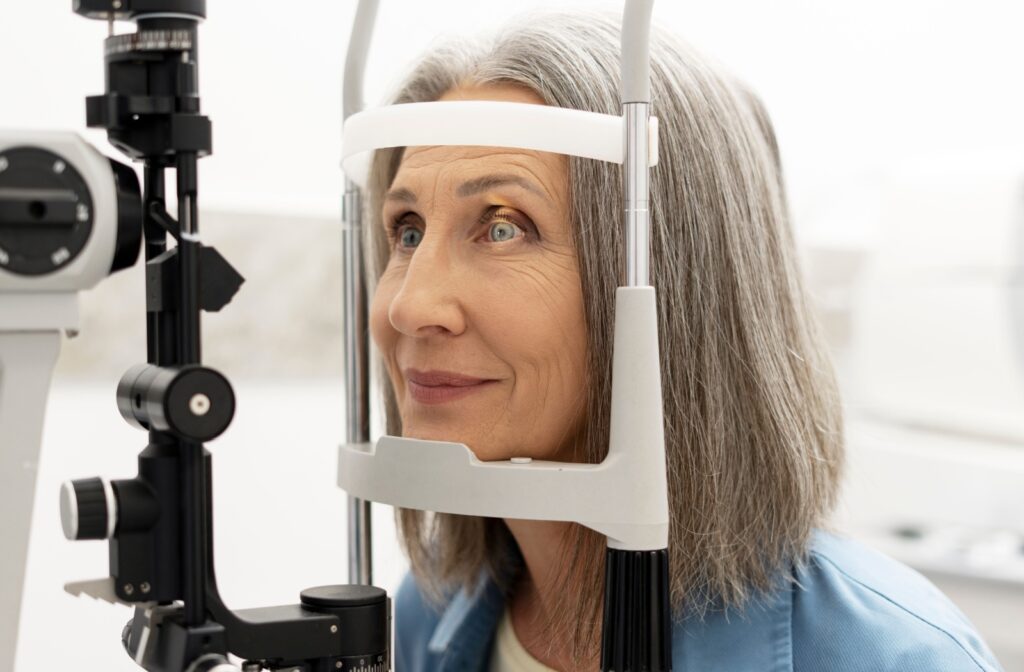
A comprehensive eye exam is much more than a simple vision screening. It’s a thorough evaluation of your vision and the physical health of your eyes. The goal is to get a complete picture of how well you see and identify any potential issues early on.
We use a series of tests to look at different aspects of your eye function and structure. This allows us to catch problems before they become more serious. It’s a proactive way to take care of one of your most important senses.
The Refraction Test & Your Prescription
The refraction test is the part of the exam that determines your prescription. You’ll look through a device called a phoropter, which holds many different lenses. We use it to show you a series of choices to find what gives you the sharpest vision.
As you look at an eye chart, we will ask you simple questions like, “Which one is clearer—number one or number two?” Your answers guide us to the precise lens powers needed to correct your eyesight.
Check for Common Refractive Errors
The refraction test helps us identify what are known as refractive errors. Common examples of refractive errors include:
- Myopia: Often called nearsightedness, this makes faraway objects appear blurry.
- Hyperopia: Also known as farsightedness, this can make it hard to focus on close-up objects.
- Astigmatism: This happens when your cornea has an irregular shape, causing blurry vision at all distances.
- Presbyopia: An age-related change that reduces your ability to focus on things up close, like a book or a menu.
A Look at Your Eye Health
A complete exam also includes checks for eye conditions that may not have obvious symptoms. We look for early signs of conditions like glaucoma, cataracts, and macular degeneration. Detecting these conditions early can make a significant difference in managing them.
How Often to Schedule an Eye Exam
The recommended frequency for eye exams depends on your age, risk factors, and whether you currently wear corrective lenses. For adults with glasses or contacts, an exam every one to two years is often suggested.
It’s also important that children have regular pediatric eye exams to support their learning and development.
Knowing where to go for eye care helps you respond effectively to any situation. While urgent care and the ER have their place, consistent, preventive care from an eye doctor is the foundation of long-term vision health.
At Total Vision Encinitas, we provide a warm, welcoming environment for your entire family to receive thorough eye care. Schedule your next visit today!