
As a parent, you pay close attention to your child’s health and development. Sometimes, you may notice subtle changes in their behavior, like squinting to see the TV, that could point to a change in their vision. Nearsightedness, or myopia, is a common condition that often begins in childhood. However, with proactive myopia control programs, it can be effectively managed.
You have options to help your child see clearly and support their long-term eye health. Effective myopia treatments for your child include management strategies like atropine eye drops, multifocal contact lenses, and ortho-k lenses, which are designed to slow its progression. A comprehensive children’s eye exam is the first step to finding the right path for your family.
How to Spot Nearsightedness in Your Child
Myopia, or nearsightedness, makes distant objects appear blurry while close-up objects remain clear. Since children may not always tell you they’re having trouble seeing, it helps to watch for certain behaviors. Look for these common signs of myopia that suggest your child may need an eye exam:
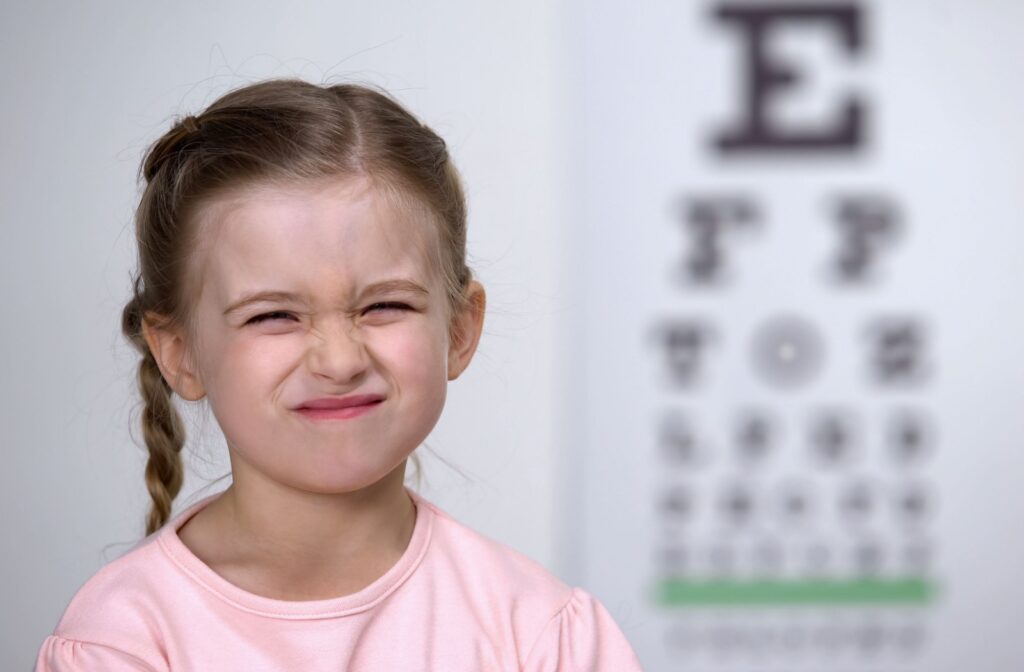
- Squinting to see distant objects like the board in class or the television
- Sitting closer to screens or holding books close to their face
- Complaining of headaches or tired eyes
- Rubbing their eyes frequently
How an Eye Exam Confirms Myopia
A comprehensive eye exam is the only way to know for sure if your child has myopia, or nearsightedness. Myopia is a common condition where distant objects appear blurry, and early detection is important to keep your child’s vision healthy as they grow.
During the exam, we use innovative technology in a welcoming, stress-free environment to make the experience comfortable for your child. Key parts of the exam include:
- Visual acuity test: Measures how clearly your child can see objects at different distances.
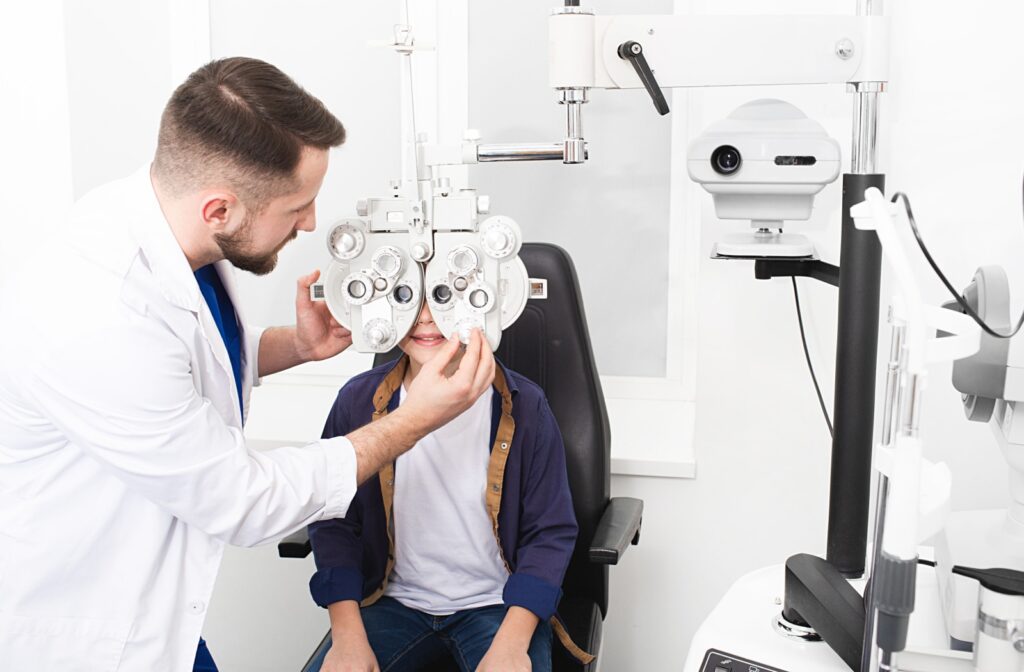
- Refraction test: Using a device called a phoropter, we switch lenses and ask which makes letters on an eye chart clearer. This test determines the exact prescription needed to correct blurry distance vision.
- Eye health evaluation: We examine the structures of your child’s eyes—including the cornea, lens, and retina—to make sure everything is healthy.
- Eye alignment and movement checks: Checks that your child’s eyes work together properly, which can affect focus and vision comfort.
By combining these tests, we can accurately diagnose myopia, discuss treatment options, and help protect your child’s vision for the future.
Myopia Control Methods and Treatments
If your child is diagnosed with myopia, several options are available to help slow its progression. The goal extends beyond just correcting blurry vision. It’s about actively managing the condition. This approach can help protect your child’s eye health for the future.
Atropine Eye Drops
Low-dose atropine eye drops are a treatment used to slow the progression of myopia in children. They are typically applied once a day, making them a simple addition to your child’s daily routine. These drops work by helping to relax the eye’s focusing mechanisms.
Multifocal Contact Lenses
These are not your average contact lenses. Multifocal soft contacts have different powers in different zones of the lens. This design corrects blurry distance vision while also changing how light focuses in the peripheral (side) vision, which can help reduce the signal that tells the eye to grow longer.
Orthokeratology (Ortho-K)
Orthokeratology, or ortho-k, is a non-surgical option that uses specially designed rigid contact lenses worn overnight. While your child sleeps, these lenses gently and temporarily reshape the front surface of the eye, the cornea. Your child can then remove the lenses in the morning and see clearly during the day without glasses or daytime contacts.
The Goal of Myopia Management
Myopia management aims to slow the rate of change in your child’s prescription. While treatments correct blurry vision, their main purpose is to reduce the rate of eye elongation that causes myopia to worsen over time. This proactive approach focuses on the underlying cause of progression.
Slower progression can lead to a lower prescription in adulthood. A lower final prescription is associated with better long-term eye health and a reduced likelihood of developing sight-threatening eye conditions later in life. It’s a forward-thinking approach to your child’s vision care.
Create a Myopia Plan with Your Eye Doctor
Each child’s eyes are unique, and their vision needs can change as they grow. The right treatment plan will depend on factors like your child’s age, prescription, and lifestyle. A conversation with an eye care professional is a great next step to explore the possibilities.
Your eye doctor in Encinitas can perform a full eye exam and discuss which myopia management options may be suitable for your child. Our Total Vision Encinitas team is here to answer your questions and create a personalized plan together. Schedule an appointment today to learn more about how we can support your child’s vision.